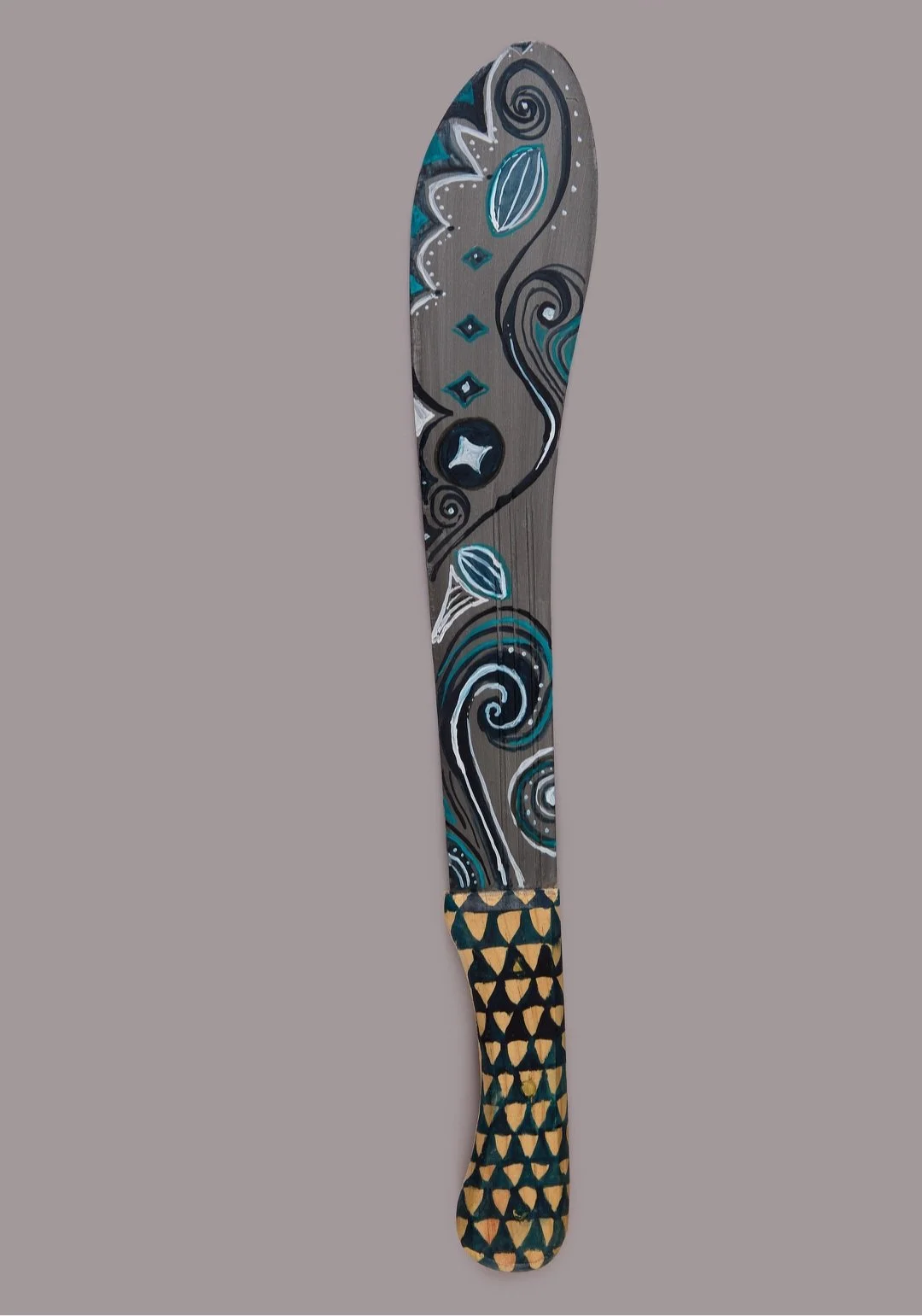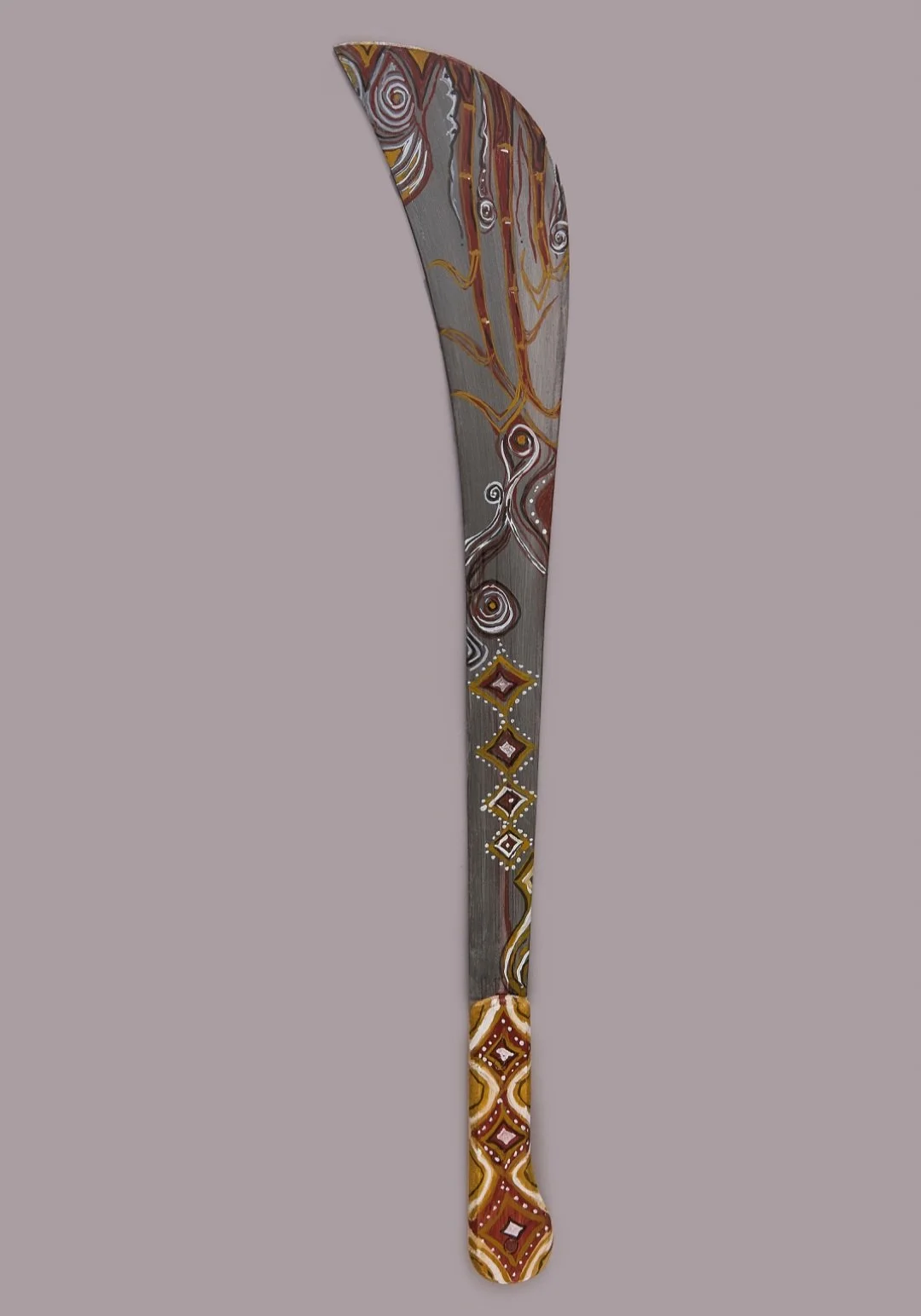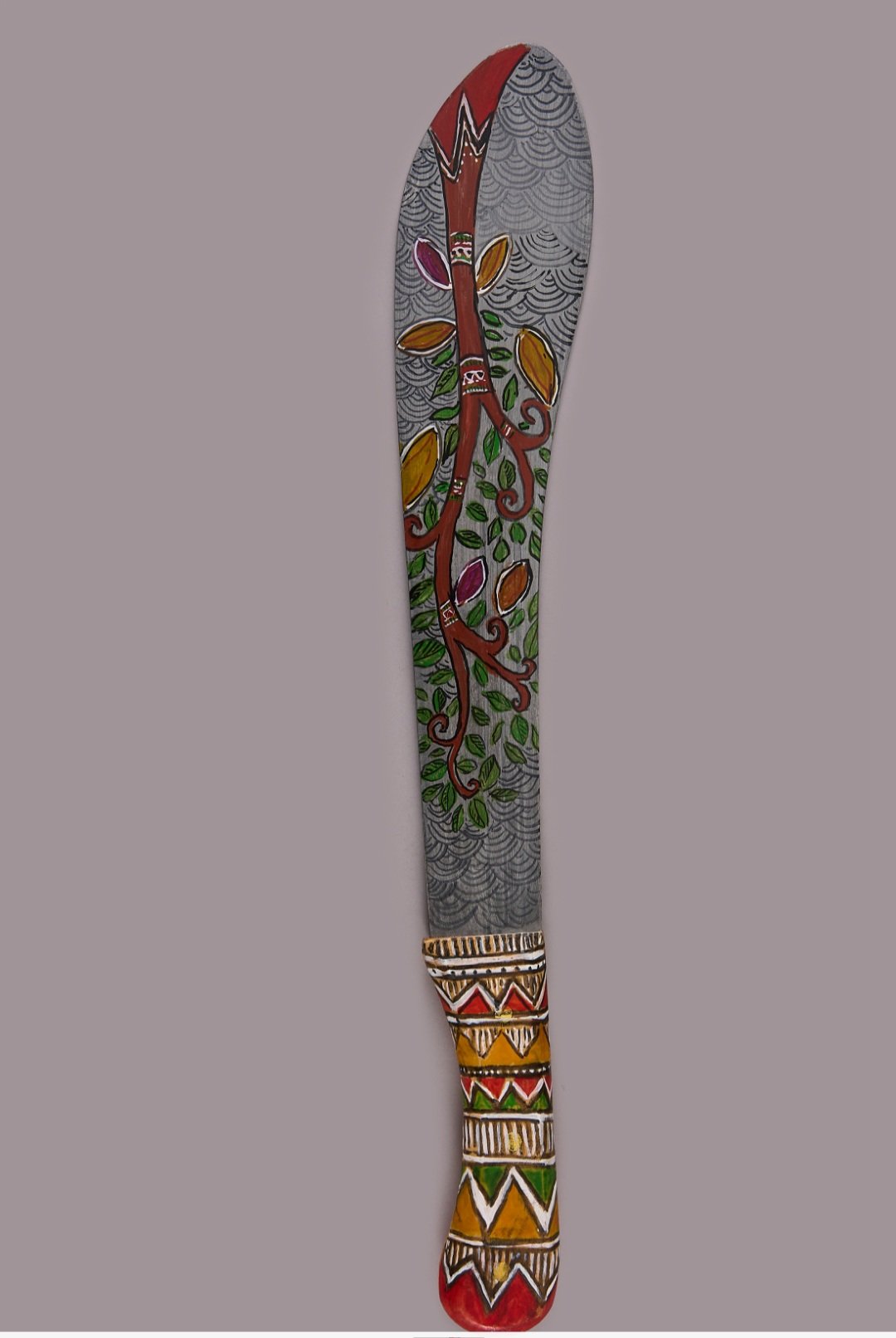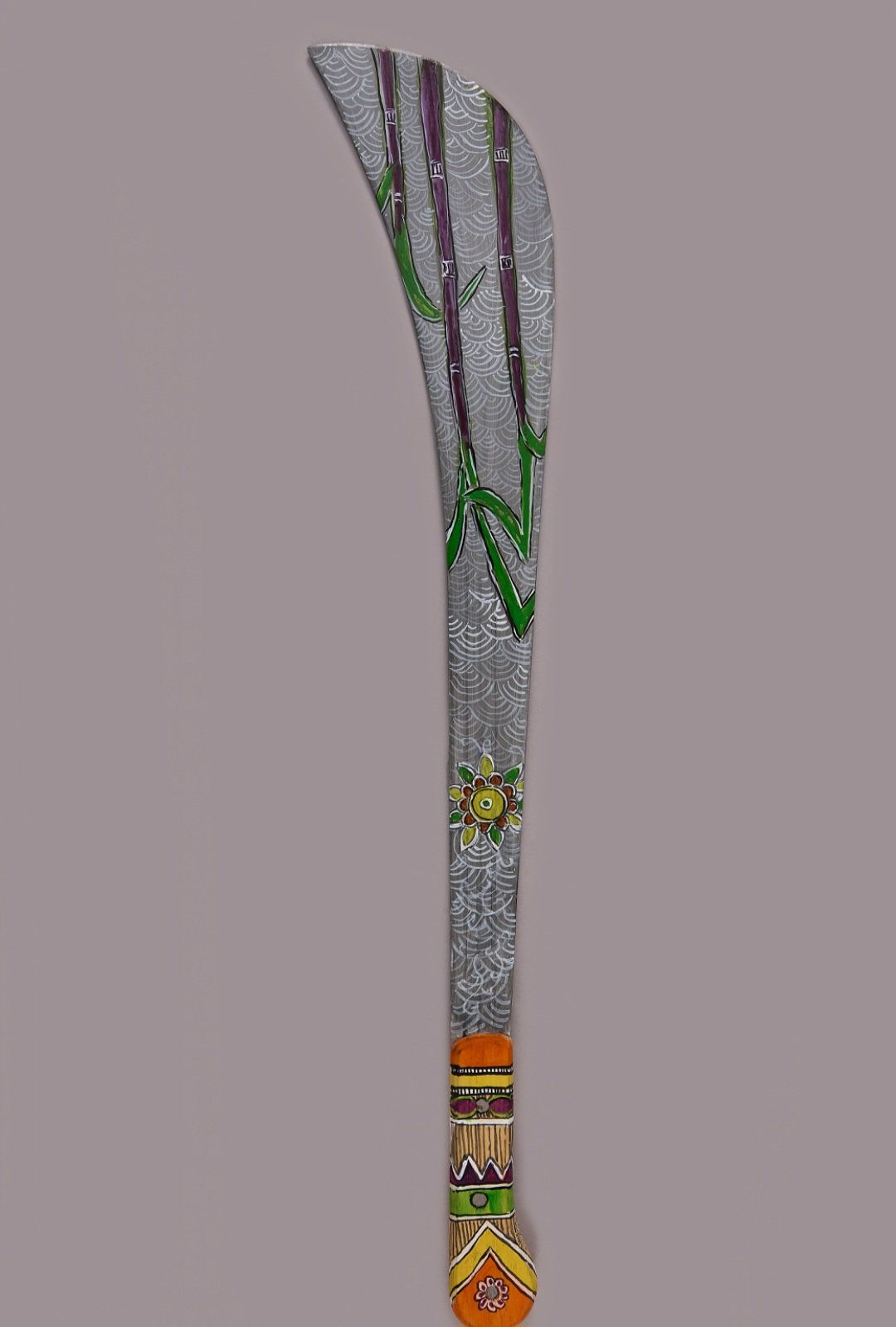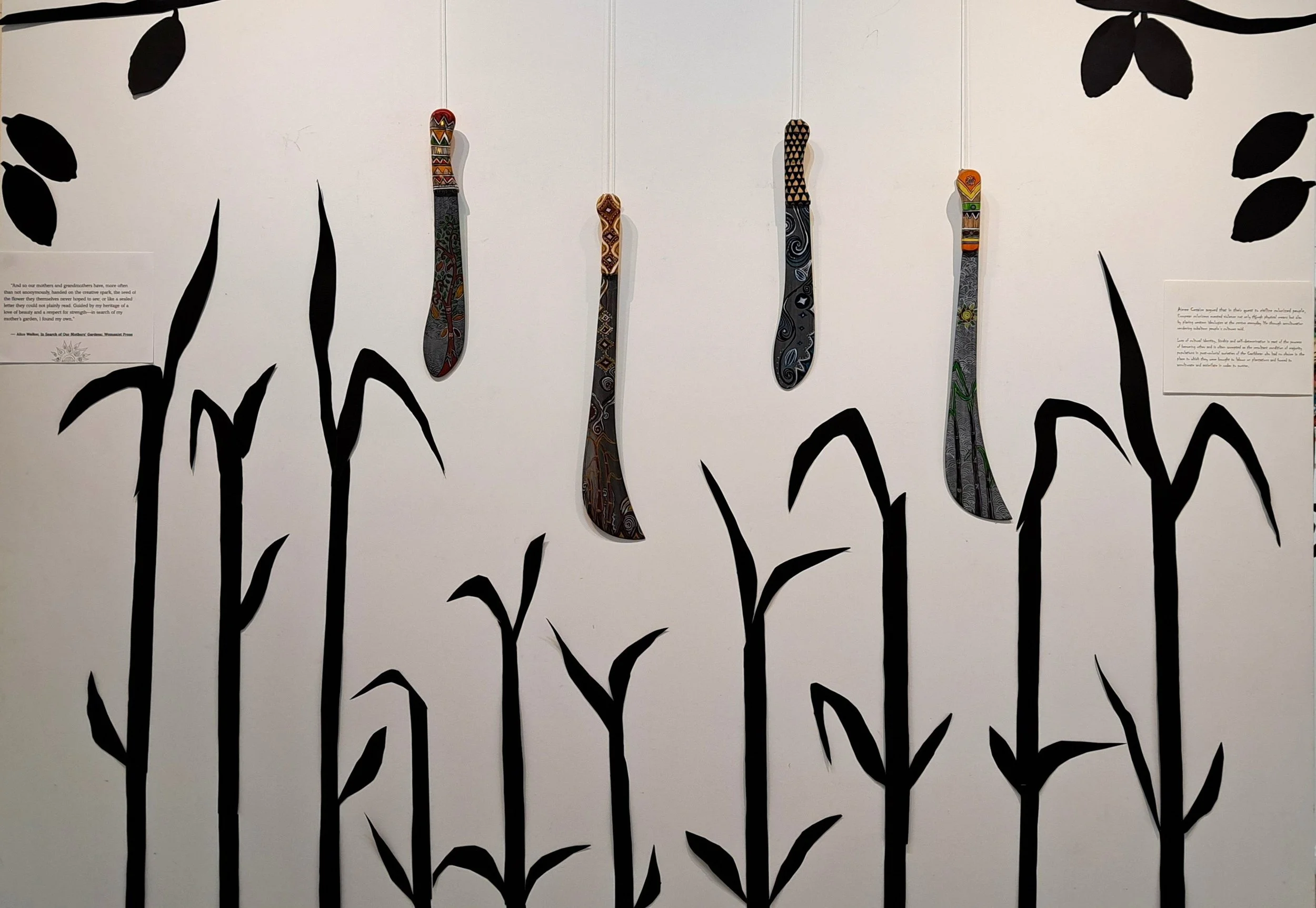
Cutlass Installation, 2026.
These cutlasses were recontextualized through painterly intervention, while the surrounding silhouettes of plantation crops evoked the material conditions of Caribbean colonial era economies. The visual repetition of the cutlass form produced a rhythm across the installation, suggesting both multiplicity and anonymity. This repetition may be read as symbolic of the many unnamed women whose labour remains underrepresented in colonial archives and national history. The silhouetted sugar cane and cocoa acted as a backdrop flattening the space devoid of figures.Yet this absence highlighted the archival silences surrounding women’s labour, even as the installation insists on their presence through material trace. Traditionally, blades such as swords are ornamented to signify ownership, lineage, and prestige. By contrast, I have never seen the cutlass, a mundane tool of labour, aestheticized. The act of painting these tools reclaimed them as sites of creative authorship and symbolic value. The surface treatments became inscriptions of memory and agency, transforming these tools of forced labour into markers of endurance and self-definition. The cutlass, therefore, became a palimpsest, bearing both the weight of its historical function and the possibility of re-signification. The cutlass, now a common object within Caribbean households; there was always a cutlass in my home, is reimagined as a symbol of power. This transformation resonates with our ongoing struggle for self-determination. By transforming a utilitarian object into a site of aesthetic and political meaning, the installation challenged viewers to reconsider inherited narratives.